


Introduction
Education has evolved significantly over the past few years, and digital learning platforms have become an essential part of classrooms around the world. One platform that has gained tremendous popularity among teachers and students is Schoology. While Schoology is primarily known as a learning management system, many educators have started incorporating Schoology games to create a more interactive and enjoyable learning experience.
Students often struggle to stay focused during traditional lessons, especially when classes become repetitive. This is where Schoology games come into play. They transform ordinary lessons into exciting activities that encourage participation, critical thinking, and collaboration. Instead of simply reading assignments and submitting homework, students can actively engage with educational content in a fun way.
In this article, we’ll explore what Schoology games are, their benefits, the different types available, and how teachers and students can use them effectively to improve learning outcomes.
What Are Schoology Games?
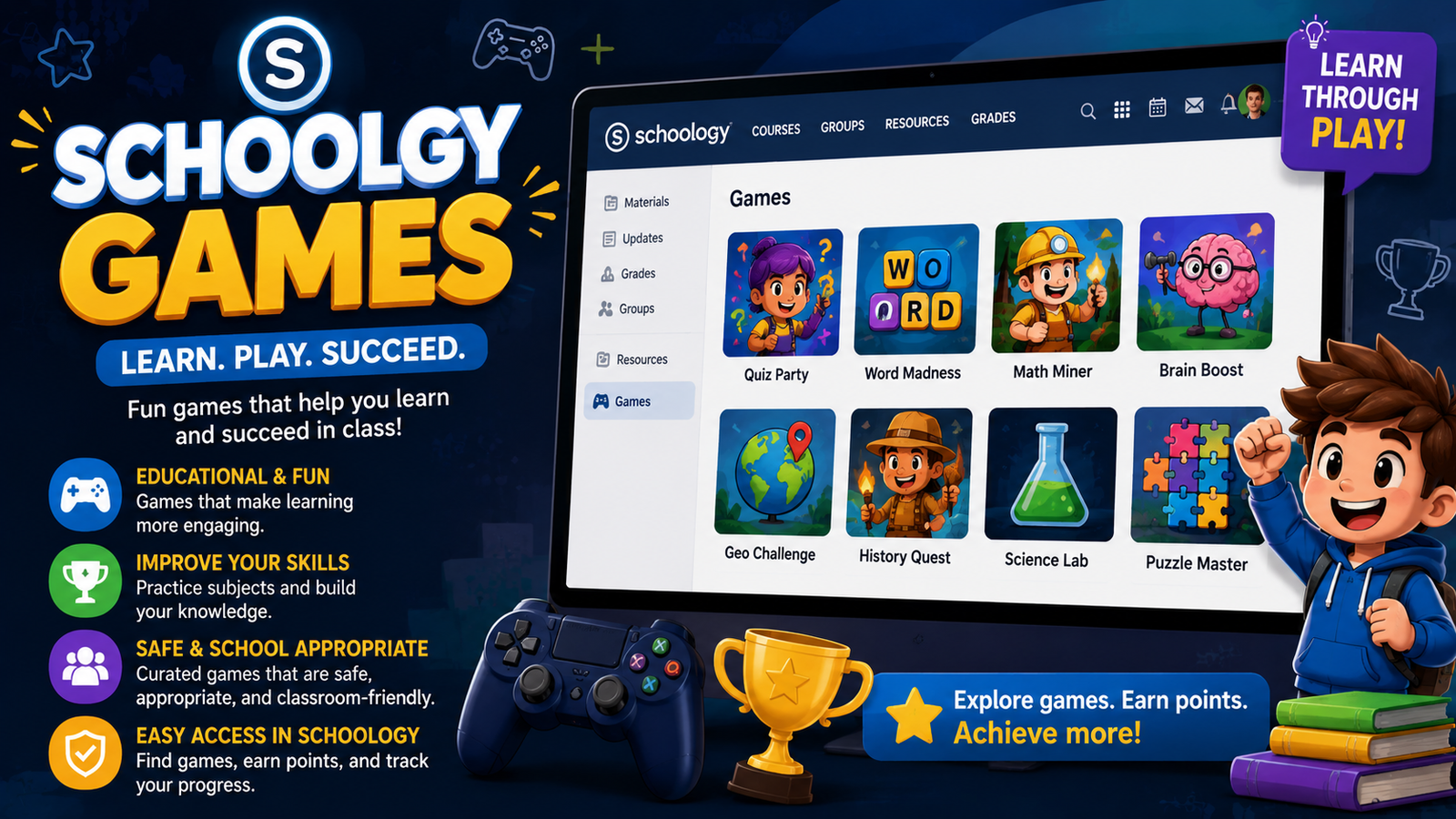
Schoology games are educational activities, quizzes, and interactive learning experiences that teachers integrate within the Schoology platform. These games are designed to reinforce lessons, assess student understanding, and keep learners engaged throughout the educational process.
Unlike traditional classroom exercises, Schoology games add an element of excitement to learning. Teachers can create competitions, challenges, and team-based activities that motivate students to participate more actively. This approach helps reduce boredom and increases overall classroom engagement.
Many teachers also connect third-party educational tools with Schoology. Platforms like Kahoot, Quizizz, Gimkit, and Blooket can be integrated into lessons, allowing students to enjoy game-based learning while still staying within the Schoology environment.
Why Are Schoology Games Becoming So Popular?
One of the biggest reasons Schoology games are becoming popular is that students naturally enjoy interactive experiences. Modern learners are already familiar with technology, so incorporating game elements into education feels natural and enjoyable.
Gamification also helps increase motivation. When students earn points, badges, or rankings, they become more interested in completing tasks and improving their performance. Even students who are usually less engaged often become more active when games are introduced.
Another reason for their popularity is flexibility. Schoology games can be used in physical classrooms, online learning environments, or hybrid education models. Teachers can easily adapt activities based on student needs and lesson objectives.
Benefits of Using Schoology Games in Education
Schoology games offer numerous advantages for both students and educators. One major benefit is increased student engagement. Interactive activities capture attention and encourage participation, making lessons more memorable.
These games also promote better knowledge retention. Research has shown that students remember information more effectively when they actively participate instead of passively consuming content. Playing educational games allows learners to apply concepts immediately.
Another important advantage is instant feedback. Many Schoology-integrated games provide immediate results, helping students identify mistakes and improve quickly. Teachers can also monitor student progress in real time and adjust their teaching strategies accordingly.
Schoology games additionally encourage teamwork and communication. Group competitions and collaborative challenges help students build social skills while learning academic content.
Popular Types of Schoology Games
There are several types of games teachers can use within Schoology to make lessons more engaging.
Quiz-Based Games
Quiz games are among the most common options. Teachers create multiple-choice questions, true-or-false activities, and timed challenges that test student knowledge. These games are simple to set up and highly effective for reviewing lessons.
Students enjoy the competitive aspect of quiz games because they can see their scores and compare their performance with classmates. This often motivates them to study harder.
Quiz-based activities can be used before exams, after completing chapters, or even as warm-up exercises at the beginning of class.
Team Challenges
Team challenges encourage collaboration among students. Instead of working individually, students work together to solve problems, answer questions, and complete tasks.
This type of game helps students develop communication skills and teaches them how to cooperate effectively. Team activities also reduce anxiety because students can support each other throughout the learning process.
Teachers can organize classroom tournaments or assign different groups specific missions to complete.
Digital Scavenger Hunts
Scavenger hunts add excitement to learning by requiring students to search for answers within course materials.
Teachers can hide clues throughout Schoology assignments, videos, discussion boards, and documents. Students then work to find the correct information and solve puzzles.
This method encourages critical thinking and improves research skills while keeping students entertained.
Badge and Reward Systems
Reward systems are another effective way to gamify learning. Teachers can award badges, points, certificates, or virtual rewards for completing assignments and achieving milestones.
Recognition helps students stay motivated and gives them a sense of accomplishment. Even small rewards can significantly improve participation rates.
The goal isn’t simply to reward high-performing students but to encourage consistent effort from everyone.
How Teachers Can Effectively Use Schoology Games
Successful implementation requires proper planning. Teachers should first identify the learning objectives they want students to achieve. Games should always support educational goals rather than serve as distractions.
It’s also important to keep activities simple. Overly complicated games may confuse students and reduce engagement. Clear instructions help students focus on learning instead of figuring out game rules.
Teachers should also vary game formats regularly. Using the same type of activity repeatedly can become repetitive. Mixing quizzes, team competitions, puzzles, and discussion activities keeps lessons fresh and exciting.
Monitoring student performance is equally important. Schoology’s analytics tools allow teachers to track participation levels and identify students who may need additional support.
Tips for Students to Get the Most Out of Schoology Games
Students should approach Schoology games as valuable learning tools rather than just entertainment. Participating actively can improve understanding and make studying easier.
Time management also plays an important role. Some activities are timed, so students should remain focused and avoid distractions during gameplay.
Collaboration is another key factor. Working with classmates can expose students to different perspectives and problem-solving techniques.
Students should also review their mistakes after each game. Learning from incorrect answers helps strengthen weak areas and improves future performance.
Potential Challenges of Schoology Games
Despite their many benefits, Schoology games are not without challenges. One issue is internet accessibility. Students with limited internet connections may face difficulties participating in certain activities.
Another challenge is maintaining balance. Too much gamification can shift attention away from actual learning objectives. Teachers must ensure that educational value remains the primary focus.
Some students may also feel pressure during competitive activities. Teachers should create inclusive environments where participation and improvement are valued more than winning.
Technical difficulties can occasionally arise as well. Having backup plans ensures lessons continue smoothly if technology issues occur.
The Future of Schoology Games
Educational technology continues to advance rapidly, and Schoology games are expected to become even more sophisticated in the future. Artificial intelligence, personalized learning paths, and adaptive game experiences may soon become standard features.
Virtual reality and augmented reality could also transform educational gaming by creating immersive learning environments. Students may eventually explore historical events, scientific concepts, or geographical locations through interactive experiences.
As digital education grows, game-based learning will likely play an even bigger role in keeping students engaged and improving educational outcomes.
Conclusion
Schoology games have changed the way students interact with educational content. By combining learning with entertainment, these activities make classrooms more engaging, interactive, and effective.
When used properly, Schoology games can boost motivation, improve knowledge retention, encourage teamwork, and provide valuable feedback for both teachers and students. They offer a modern solution to one of education’s biggest challenges: keeping students interested in learning.
As technology continues to evolve, game-based learning will only become more important. Whether you’re a teacher looking to increase classroom participation or a student wanting a more enjoyable learning experience, Schoology games provide an excellent way to make education both productive and fun.
You May Also Read: Core Core


