


Introduction
Language is constantly evolving, and every generation introduces new words and phrases that quickly become part of everyday conversations. One of the most popular modern expressions is “tea slang.” If you spend time on social media platforms, watch reality shows, or engage in online communities, chances are you have heard someone say, “Spill the tea” or “What’s the tea?” While these phrases may sound unusual to people unfamiliar with internet culture, they have become widely recognized across the world.
Tea slang is more than just a trendy phrase. It represents a unique way people share information, discuss rumors, exchange opinions, and engage in conversations about current events. The expression has become deeply embedded in digital communication and continues to influence how people interact online and offline.
In this article, we will explore the meaning of tea slang, its origins, its role in modern communication, and why it remains one of the most popular expressions in contemporary culture.
What Does Tea Slang Mean?
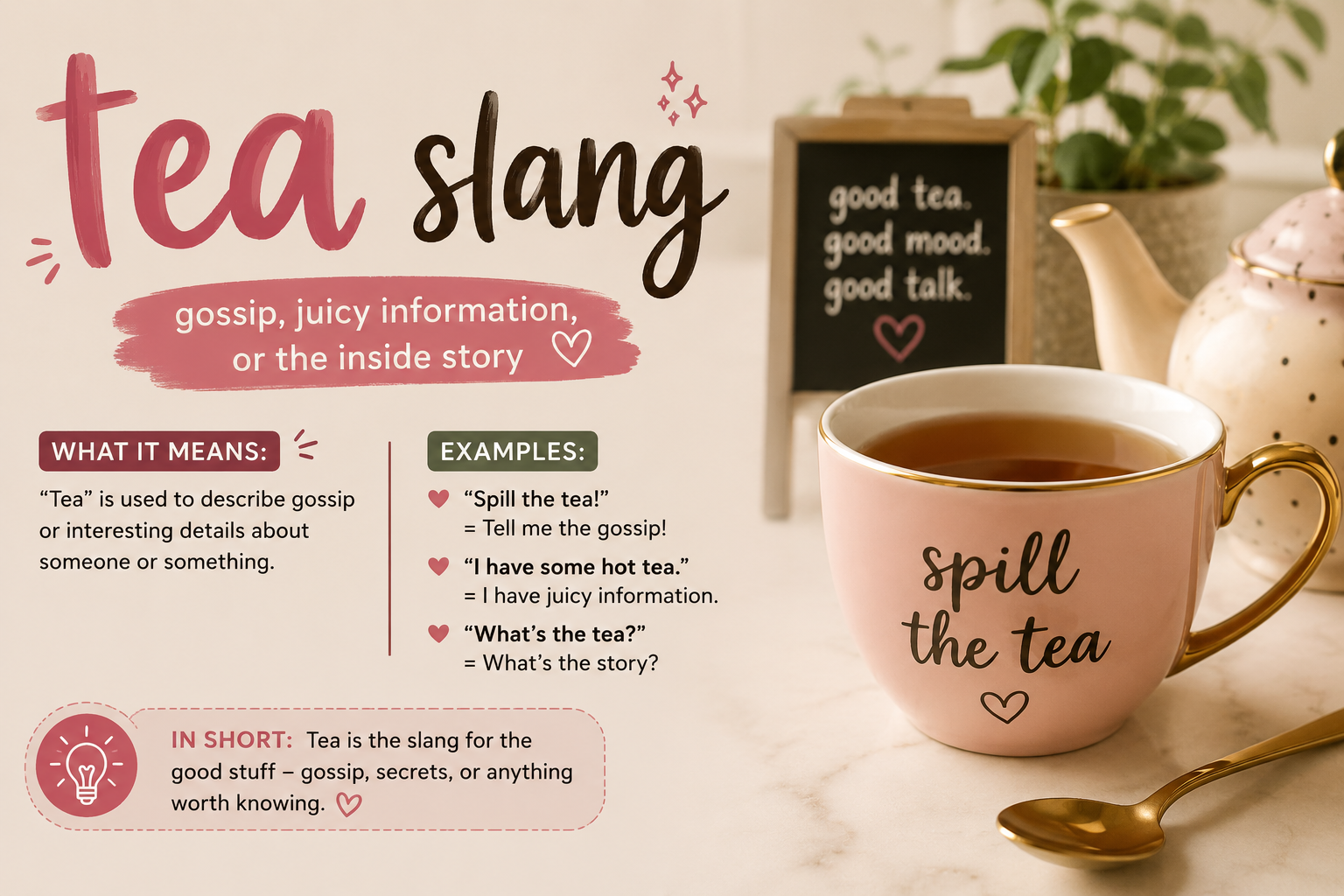
Tea slang refers to gossip, news, insider information, or interesting details about a person, event, or situation. When someone asks for the tea, they are essentially asking for the latest updates, rumors, or hidden details. Likewise, when someone says they are going to “spill the tea,” they are preparing to reveal information that others may find interesting or surprising.
The term is often used in a playful and lighthearted way. Unlike traditional gossip, tea does not always have negative intentions. It can simply involve sharing exciting updates, discussing celebrity news, or talking about events happening within a social group. Because of its flexible meaning, tea slang has become suitable for a wide range of conversations.
In today’s digital world, tea slang has become a universal expression among younger audiences. Whether discussing social media influencers, celebrities, television shows, or personal experiences, the phrase serves as a fun and engaging way to exchange information.
The Origins of Tea Slang
Many people assume tea slang originated from modern social media, but its roots actually go back much further. The term gained popularity within African American communities and LGBTQ+ culture, where “tea” was used to refer to truth, personal information, or hidden details about someone’s life.
During the late twentieth century, the expression became increasingly common in drag culture and ballroom communities. These communities played a significant role in shaping many of the slang terms that later entered mainstream culture. Within these circles, sharing “tea” often meant revealing truthful information or discussing events that others might not know about.
As internet culture expanded, tea slang moved beyond its original communities and entered mainstream vocabulary. Social media platforms accelerated its spread, allowing millions of users to adopt and popularize the phrase. Today, many people use the expression without realizing its rich cultural history and significance.
Popular Tea Slang Expressions
Tea slang has inspired several related expressions that are commonly used in conversations. One of the most famous phrases is “spill the tea.” This expression means sharing gossip, revealing secrets, or providing important information about a situation. It is frequently used when someone has an interesting story to tell.
Another popular phrase is “What’s the tea?” This question is commonly asked when someone wants updates about a situation. It serves as a casual way of asking what is happening or what information others have learned. The phrase is especially common in online discussions and group chats.
People also use expressions such as “That’s the tea” or “And that’s the tea.” These phrases are often used to emphasize a statement or conclude a discussion. They suggest that the speaker has shared the truth or provided the most important information about a particular topic.
Tea Slang in Social Media Culture
Social media has played a major role in the rise of tea slang. Platforms such as TikTok, Instagram, YouTube, and X have helped transform the expression into a global phenomenon. Content creators frequently use tea-related phrases in videos, captions, and discussions to attract attention and encourage engagement.
Many online creators have built entire audiences around sharing celebrity tea, entertainment news, and trending topics. Videos featuring drama, controversies, and behind-the-scenes information often generate significant interest because people naturally enjoy learning about developments they may not have known before.
Tea slang also contributes to a sense of community among social media users. Shared language helps people feel connected, and tea-related expressions create a casual and entertaining atmosphere. As a result, the phrase continues to thrive across multiple digital platforms and online communities.
Why Tea Slang Became So Popular
One reason tea slang became popular is its simplicity. The expression is short, memorable, and easy to understand. People can quickly use it in conversations without needing lengthy explanations, making it ideal for modern communication.
Another factor is the human fascination with stories and information. Throughout history, people have enjoyed discussing events, sharing updates, and exchanging news. Tea slang provides a modern and playful way to continue this age-old tradition. It adds humor and excitement to conversations while keeping interactions engaging.
The influence of celebrities, influencers, and entertainment media has also contributed to its popularity. As public figures regularly use tea-related expressions, their audiences naturally adopt the same language. This cycle of exposure has helped tea slang remain relevant and widely recognized.
The Positive and Negative Sides of Tea Slang
Like any form of communication, tea slang has both benefits and drawbacks. On the positive side, it encourages social interaction and conversation. Sharing interesting information can strengthen friendships, create entertainment, and help people stay informed about topics that interest them.
Tea slang can also add humor and personality to communication. Many people enjoy using playful expressions because they make conversations feel more relaxed and enjoyable. In social settings, discussing harmless tea can be a fun way to connect with others and build relationships.
However, there can be negative consequences when tea crosses the line into harmful gossip or misinformation. Sharing unverified rumors can damage reputations and create misunderstandings. For this reason, it is important to use tea slang responsibly and ensure that information being shared is accurate and respectful.
The Future of Tea Slang
Language trends often change quickly, yet some expressions manage to remain popular for many years. Tea slang appears to be one of those lasting terms because it fulfills a common communication need. People will always seek information, discuss events, and share stories, making the concept behind tea highly relevant.
As new social media platforms emerge, tea slang may continue to evolve. Future generations could introduce variations of the phrase or create entirely new expressions inspired by it. However, the underlying idea of sharing interesting information is unlikely to disappear anytime soon.
The continued influence of digital culture suggests that tea slang will remain a recognizable part of online communication. Whether used in casual conversations, entertainment content, or social media discussions, the phrase has secured its place in modern language.
Conclusion
Tea slang has become one of the most recognizable expressions in contemporary communication. What began within specific cultural communities has grown into a global phenomenon used by millions of people every day. From asking for updates to sharing exciting stories, tea slang provides a fun and engaging way to exchange information.
Its popularity reflects the evolving nature of language and the powerful influence of social media. The expression continues to connect people through shared conversations, entertainment, and storytelling. While it is important to use tea responsibly and avoid spreading misinformation, there is no denying the impact this simple phrase has had on modern communication.
As language continues to evolve, tea slang serves as a perfect example of how cultural expressions can move from niche communities to mainstream society. Whether someone is asking for the latest news or preparing to reveal an interesting story, one thing is certain—the tea will always be worth talking about.
You May Also Read:Is Cheer a Sport


