


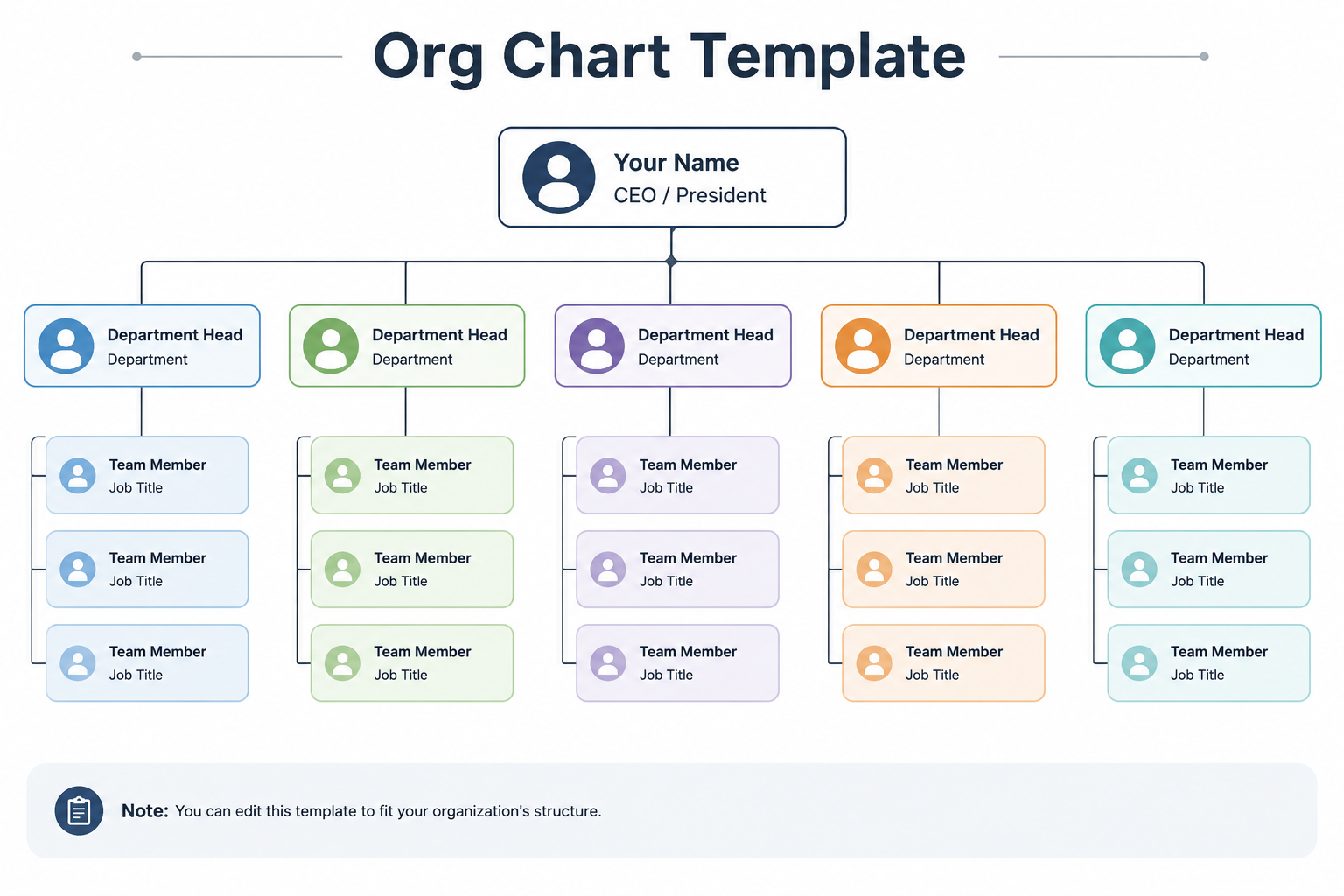
An organization runs best when everyone knows who they report to, who makes decisions, and how different departments work together. That’s exactly where an org chart template becomes valuable. Whether you’re managing a startup with ten employees or a corporation with thousands of staff members, an organizational chart provides a visual representation of your company’s structure. Instead of leaving employees confused about roles and responsibilities, an org chart creates clarity and improves communication across every level of the business.
Many people assume organizational charts are only useful for HR departments, but that’s far from the truth. Project managers, executives, department heads, and even new employees benefit from having a well-designed organizational chart. It simplifies reporting relationships, helps onboard new hires, and gives everyone a better understanding of how the company operates.
In this guide, we’ll explore everything you need to know about an org chart template, including its benefits, different types, best practices, and tips for choosing the right format. By the end, you’ll know exactly how to create an organizational chart that is both practical and easy to maintain.
What Is an Org Chart Template?
An org chart template is a pre-designed framework that helps businesses visualize their organizational hierarchy. Instead of creating a chart from scratch, you simply customize the template by adding employee names, job titles, departments, and reporting relationships. This saves time while ensuring the final chart looks professional and organized.
Templates come in various formats to suit different organizational structures. Some companies use traditional top-down hierarchies where authority flows from executives to employees. Others prefer flat organizational charts, matrix structures, or divisional layouts. A good template makes it easy to represent any type of business structure without requiring advanced design skills.
One of the biggest advantages of using an org chart template is consistency. Every department can follow the same design style, making the entire organization easier to understand. Whether the chart is viewed during meetings, onboarding sessions, or planning discussions, everyone sees a clear and standardized representation of the company.
Why Every Business Should Use an Org Chart Template
An organizational chart does much more than display job titles. It serves as a communication tool that helps employees understand how different teams interact. When people know exactly who handles specific responsibilities, collaboration becomes faster and more efficient.
Managers also benefit from organizational charts because they can identify staffing gaps and overlapping responsibilities. If multiple employees are performing similar tasks or a department lacks leadership, the chart makes those issues easy to spot. This helps businesses make smarter hiring and restructuring decisions.
For growing companies, an org chart template provides scalability. As new employees join and departments expand, updating a template takes only a few minutes. Instead of redesigning everything from the beginning, businesses can simply add new positions while keeping the overall structure organized.
Different Types of Org Chart Templates
Not every company follows the same organizational model, which is why different template styles exist. The traditional hierarchical chart remains the most common because it clearly shows reporting relationships from executives down to entry-level employees. This format works particularly well for corporations, government agencies, and large businesses.
A flat organizational chart is ideal for startups and modern businesses that have fewer management layers. Employees often collaborate directly with leadership, making communication faster and reducing unnecessary bureaucracy. Flat structures encourage teamwork and quicker decision-making.
Matrix organizational charts are designed for companies where employees report to more than one manager. This is common in technology firms, engineering companies, and project-based organizations. While slightly more complex, matrix templates accurately reflect cross-functional collaboration between departments.
Key Elements Every Org Chart Should Include
A useful org chart template starts with employee names and job titles. These basic details allow everyone to identify who occupies each position within the organization. Including accurate titles helps employees understand authority levels and reporting structures.
Departments should also be clearly identified. Marketing, finance, sales, customer support, operations, and human resources all play unique roles within a business. Separating departments visually makes the chart easier to read while highlighting how teams connect with one another.
Reporting lines are equally important. Straight lines connecting positions illustrate supervisory relationships and chains of command. Without these visual connections, the chart loses much of its value because employees may struggle to determine who reports to whom.
Benefits of Using an Org Chart Template
One major benefit is improved communication. Employees spend less time wondering who handles certain responsibilities because the chart provides immediate answers. This reduces confusion and speeds up decision-making throughout the organization.
Another advantage is better workforce planning. HR professionals frequently use organizational charts to evaluate staffing needs, succession planning, promotions, and departmental restructuring. Having a visual overview makes strategic planning much easier than relying solely on spreadsheets.
An org chart template also strengthens employee onboarding. New hires often feel overwhelmed during their first few weeks. Giving them access to an organizational chart helps them quickly recognize team members, department leaders, and reporting relationships, allowing them to integrate into the company more confidently.
How to Create an Effective Org Chart Template
The first step is identifying your organization’s structure. Decide whether your company follows a hierarchical, matrix, divisional, or flat model before selecting a template. Choosing the correct format from the beginning prevents unnecessary revisions later.
Next, gather accurate employee information. Include names, job titles, departments, supervisors, and any relevant leadership roles. Double-check every detail because outdated information can create confusion rather than solving it.
Finally, keep the design clean and simple. Avoid excessive colors, decorative graphics, or unnecessary details that distract from the chart’s purpose. A professional organizational chart should be easy to read at a glance, whether viewed digitally or printed.
Common Mistakes to Avoid
One common mistake is failing to update the organizational chart regularly. Employees change roles, departments expand, and leadership positions evolve over time. An outdated chart quickly becomes unreliable and loses its usefulness.
Another mistake is making the chart overly complicated. Including every project, responsibility, or temporary assignment creates clutter. Instead, focus on reporting relationships and core organizational roles while keeping the design straightforward.
Businesses should also avoid creating separate chart styles for different departments. Consistency improves readability and ensures employees can understand any organizational chart regardless of which department it represents.
Conclusion
An org chart template is far more than a simple diagram. It serves as a practical business tool that improves communication, supports organizational planning, and helps employees understand how the company functions. Whether you’re running a small business or managing a large enterprise, having a clear organizational structure contributes to greater efficiency and stronger collaboration.
The best organizational charts are easy to read, regularly updated, and designed with the needs of employees in mind. They simplify reporting relationships, strengthen onboarding, and provide leadership with valuable insights into workforce planning.
As your business grows, your organizational structure will naturally evolve. Choosing a flexible org chart template ensures you can adapt quickly without rebuilding everything from scratch. Investing a little time in creating an effective organizational chart today can save countless hours of confusion and miscommunication in the future while supporting a more organized and productive workplace.
You May Also Read: Company Snapshot


