


Introduction
For generations, textbooks have been considered the backbone of education. Walk into almost any classroom, and you will find students flipping through pages, highlighting key points, and relying on textbooks as their primary source of information. While textbooks have undoubtedly played an important role in shaping education systems around the world, the way we learn today has changed dramatically.
Technology, access to information, and evolving learning styles have transformed the educational landscape. Students now have countless resources available at their fingertips, from interactive videos and podcasts to online courses and virtual simulations. In this environment, many educators and learners are beginning to ask an important question: Is the traditional textbook still the best way to learn?
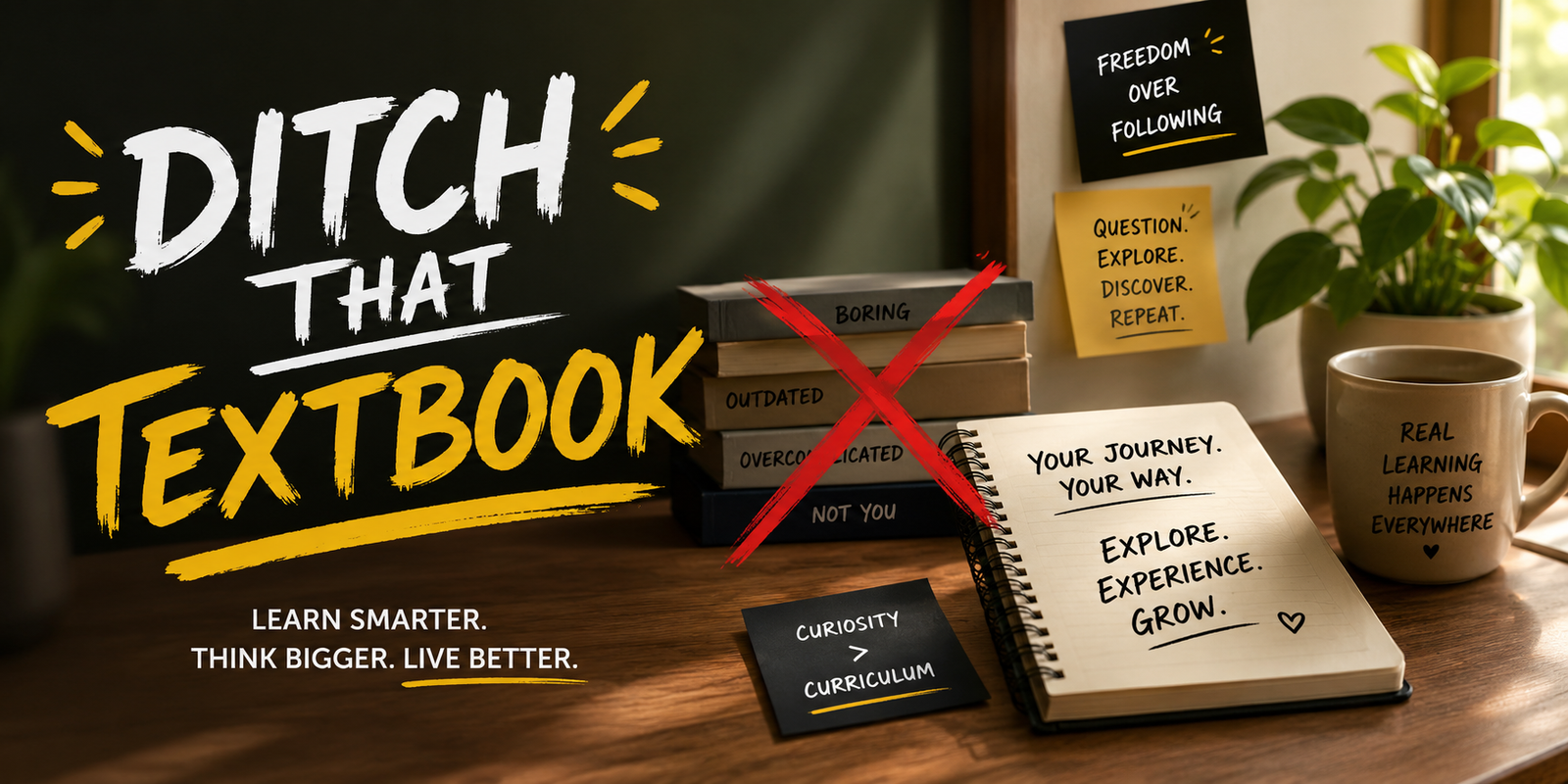
The phrase “ditch that textbook” is not about completely abandoning books. Instead, it represents a shift toward more engaging, flexible, and effective learning methods that better align with the needs of modern students. As education continues to evolve, it becomes increasingly important to explore alternatives that encourage deeper understanding, creativity, and critical thinking.
The Limitations of Traditional Textbooks
One of the biggest challenges with traditional textbooks is that they often become outdated very quickly. In fast-changing fields such as technology, science, business, and healthcare, new discoveries and developments occur regularly. By the time a textbook is published and distributed, some of its information may already be outdated.
Another issue is that textbooks tend to present information in a one-size-fits-all format. Every student learns differently. Some learners absorb information best through visuals, while others prefer hands-on experiences or interactive discussions. A static textbook cannot easily adapt to these varying learning preferences, making it difficult for some students to fully engage with the material.
Textbooks can also encourage passive learning. Students often spend hours reading chapters and memorizing facts without truly understanding how concepts apply in real-world situations. This approach may help with short-term recall, but it does not always promote long-term comprehension or practical problem-solving skills. Modern education increasingly values active participation, critical thinking, and collaboration—areas where traditional textbooks often fall short.
The Rise of Digital Learning Resources
The digital age has opened the door to a vast range of educational tools and resources. Students today can access instructional videos, online tutorials, educational apps, podcasts, and interactive learning platforms within seconds. These resources provide opportunities to learn in ways that are more engaging and dynamic than simply reading printed pages.
Interactive content allows students to actively participate in the learning process. Instead of merely reading about a scientific experiment, they can watch demonstrations, conduct virtual simulations, or even participate in online labs. This hands-on approach often leads to better understanding and retention of information.
Digital resources also provide flexibility. Learners can study at their own pace, revisit difficult concepts, and access information whenever they need it. This level of personalization helps students take greater control of their education and creates a learning experience that is tailored to individual needs rather than forcing everyone into the same mold.
Why Engagement Matters More Than Memorization
One of the most significant shifts in modern education is the growing emphasis on engagement rather than rote memorization. While memorizing facts has its place, true learning occurs when students understand concepts deeply and can apply them in different contexts.
Traditional textbooks often focus heavily on delivering information. However, learning is most effective when students interact with the material. Discussions, projects, case studies, and real-world examples help learners connect abstract concepts to practical situations. These methods encourage active participation and make learning more meaningful.
Engagement also increases motivation. Students are naturally more interested in lessons that feel relevant and interactive. Whether it is a video explaining a complex topic, a collaborative group project, or an educational game, engaging learning experiences capture attention and make students more willing to invest time and effort in their studies.
When students are engaged, they are more likely to retain information, develop critical thinking skills, and cultivate a genuine love for learning. These outcomes are far more valuable than simply memorizing facts for an exam and forgetting them shortly afterward.
The Role of Teachers in a Textbook-Free Approach
Many people assume that removing textbooks means creating more work for teachers. While there can be challenges, a textbook-free approach often allows educators to become facilitators of learning rather than mere distributors of information.
Teachers can curate a variety of resources that better match the needs of their students. Instead of relying on a single textbook, they can combine videos, articles, podcasts, discussions, and hands-on activities to create richer learning experiences. This variety helps keep lessons fresh and relevant.
A flexible approach also allows teachers to respond more quickly to current events and emerging topics. If something significant happens in the world, educators can immediately incorporate it into classroom discussions rather than waiting for future textbook editions to address it.
Most importantly, teachers can focus on helping students develop skills such as critical thinking, collaboration, communication, and creativity. These skills are increasingly important in today’s world and are often more valuable than simply memorizing information from a textbook.
Real-World Learning Creates Stronger Connections
One reason many educators support the idea of ditching traditional textbooks is that real-world learning tends to be more memorable and impactful. When students can see how concepts apply outside the classroom, they develop a deeper understanding of the subject matter.
For example, rather than reading about environmental issues in a textbook, students might analyze local environmental data, participate in community projects, or interview experts in the field. These experiences make learning tangible and meaningful.
Project-based learning is another effective alternative. Students can work on solving real problems, creating presentations, conducting research, or designing innovative solutions. These activities encourage independent thinking and help learners build practical skills that will serve them throughout their lives.
Real-world learning also helps students understand the relevance of education. Instead of asking, “Why do I need to learn this?” they begin to see direct connections between classroom knowledge and everyday life, future careers, and global challenges.
Finding the Right Balance
Despite the many advantages of modern learning methods, completely eliminating textbooks may not always be the best solution. Textbooks still offer valuable benefits, including structured content, reliability, and comprehensive coverage of subjects. The goal should not necessarily be to throw textbooks away but to use them as one tool among many.
A balanced approach combines the strengths of textbooks with the advantages of digital resources and interactive learning experiences. Students can benefit from having a solid foundation provided by textbooks while also exploring concepts through videos, discussions, projects, and real-world applications.
Educational success often comes from variety. Different tools serve different purposes, and effective learning environments use multiple resources to meet diverse student needs. By blending traditional and modern approaches, educators can create richer and more effective learning experiences.
Conclusion
The phrase “ditch that textbook” symbolizes a broader movement toward more engaging, flexible, and student-centered education. While textbooks have played an important role for decades, they are no longer the only—or even the best—source of knowledge for many learners.
Modern students live in a world filled with information, technology, and opportunities for interactive learning. They need educational experiences that encourage curiosity, creativity, critical thinking, and real-world problem-solving. By embracing diverse learning resources and moving beyond the limitations of traditional textbooks, educators can better prepare students for the challenges and opportunities of the future.
Ultimately, the goal is not to reject textbooks entirely but to recognize that learning should be dynamic, adaptable, and engaging. When education evolves to meet the needs of modern learners, everyone benefits. Sometimes, the first step toward that evolution is being willing to say, “It’s time to ditch that textbook.”
You May Also Read: Tea Slang


