


Introduction
Commercial flooring is one of the most important investments any business can make. Whether you own a warehouse, retail store, manufacturing facility, hospital, restaurant, office, or showroom, the condition of your floor directly impacts safety, appearance, maintenance costs, and the overall customer experience. Choosing the right flooring solution can save money, improve efficiency, and enhance the professional image of your business.
Among the many flooring options available today, commercial epoxy flooring has become one of the most trusted solutions for businesses of all sizes. It combines strength, durability, and aesthetic appeal into a single flooring system that performs exceptionally well under heavy traffic and demanding conditions. Unlike traditional concrete floors, epoxy creates a seamless, protective surface that resists damage while remaining easy to clean and maintain.
This guide explores everything you need to know about commercial epoxy flooring, including its benefits, applications, installation process, maintenance requirements, and why it continues to be the preferred flooring solution for commercial properties around the world.
What Is Commercial Epoxy Flooring?
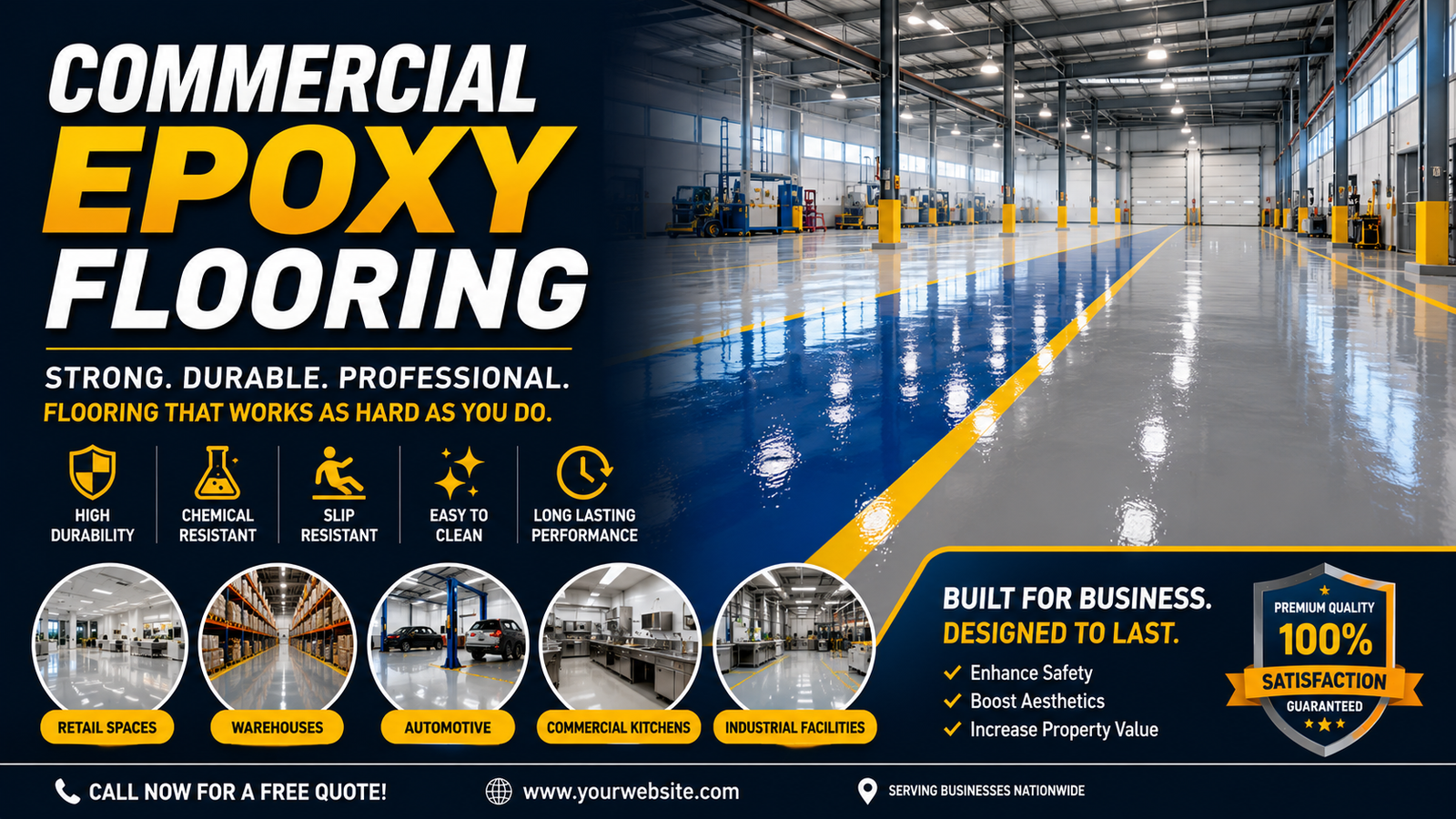
Commercial epoxy flooring is a high-performance flooring system created by applying multiple layers of epoxy resin over a properly prepared concrete surface. Once cured, the epoxy forms a hard, durable, and chemically resistant coating that protects the underlying concrete from wear and damage.
Unlike ordinary paint, epoxy chemically bonds with the concrete, creating a long-lasting surface that can withstand heavy machinery, constant foot traffic, vehicle movement, spills, moisture, and harsh cleaning chemicals. This strong bond makes epoxy flooring much more reliable than many traditional flooring materials used in commercial buildings.
Modern epoxy flooring systems are available in a wide variety of colors, textures, and finishes. Businesses can choose glossy finishes for a sleek appearance, textured surfaces for improved slip resistance, decorative flake systems for retail spaces, or metallic finishes for premium showrooms and office environments. This flexibility allows businesses to achieve both functionality and visual appeal.
Benefits of Commercial Epoxy Flooring
One of the biggest reasons businesses choose commercial epoxy flooring is its outstanding durability. Commercial environments experience significantly more traffic than residential spaces, making durability a top priority. Epoxy flooring easily withstands forklifts, heavy equipment, carts, machinery, and constant pedestrian movement without cracking or wearing down quickly.
Another major advantage is its low maintenance requirements. Since epoxy creates a seamless surface without grout lines or gaps, dirt, dust, liquids, and debris remain on the surface rather than becoming trapped. Routine sweeping and occasional mopping are usually enough to keep the floor looking clean and professional, reducing long-term maintenance costs.
Epoxy flooring also offers impressive resistance to chemicals, stains, oil, grease, water, and impact damage. This makes it ideal for industrial facilities, automotive shops, commercial kitchens, healthcare facilities, and manufacturing plants where spills occur regularly. Businesses benefit from longer floor life while reducing repair and replacement expenses.
Industries That Use Commercial Epoxy Flooring
Warehouses are among the most common users of commercial epoxy flooring. Heavy forklifts, pallet jacks, storage racks, and constant inventory movement require a flooring system capable of handling significant weight without deteriorating. Epoxy provides excellent load-bearing performance while reducing concrete dust and improving workplace safety.
Healthcare facilities also rely heavily on epoxy flooring because hygiene is critical. Hospitals, clinics, laboratories, and medical centers benefit from seamless surfaces that prevent bacteria, mold, and contaminants from collecting in cracks or joints. The easy-to-clean surface helps maintain strict sanitation standards while supporting infection control protocols.
Retail stores, shopping centers, restaurants, hotels, offices, educational institutions, automotive dealerships, manufacturing plants, food processing facilities, and commercial garages also use epoxy flooring extensively. Each industry values different aspects of epoxy, whether it’s appearance, durability, sanitation, or chemical resistance.
Different Types of Commercial Epoxy Flooring
Solid epoxy flooring is one of the strongest options available for commercial properties. It creates a thick protective coating capable of handling extremely heavy traffic while offering outstanding chemical resistance. Industrial facilities often choose this option because of its long lifespan and dependable performance.
Decorative flake epoxy flooring combines durability with style by incorporating colored vinyl flakes into the epoxy coating. This creates a textured, attractive finish that hides dirt and minor imperfections while providing additional slip resistance. Retail stores, schools, gyms, and commercial offices commonly select this design.
Metallic epoxy flooring is designed for businesses looking to create a premium appearance. Metallic pigments produce unique patterns with depth and movement that resemble polished stone or flowing liquid metal. Luxury showrooms, hotels, restaurants, and modern office spaces often choose metallic epoxy to create memorable interiors that impress customers.
The Commercial Epoxy Flooring Installation Process
Proper installation begins with concrete surface preparation. This is arguably the most important step because epoxy performs best when applied to clean, dry, and properly profiled concrete. Professionals use grinding or shot blasting equipment to remove dirt, previous coatings, and surface contaminants while creating the ideal bonding surface.
After preparation, cracks and damaged areas are repaired to create a smooth foundation. Moisture testing may also be performed to ensure the concrete is suitable for epoxy application. Skipping these preparation steps often leads to premature coating failure, making professional installation highly recommended.
Once the surface is ready, installers apply primer, base coats, decorative elements if desired, and protective topcoats. Each layer requires proper curing before the next layer is added. After the final coat cures completely, the floor becomes an exceptionally durable surface capable of serving commercial facilities for many years.
Maintenance Tips for Commercial Epoxy Flooring
One of the reasons businesses appreciate commercial epoxy flooring is its simple maintenance routine. Daily cleaning typically involves sweeping or using a dust mop to remove loose debris that could scratch the surface over time. Regular cleaning helps preserve the floor’s appearance while extending its lifespan.
Periodic mopping with a mild cleaning solution removes dirt, stains, and spills without damaging the protective coating. Businesses should avoid highly abrasive cleaning tools or harsh acidic chemicals that may reduce the finish’s shine over time. Following manufacturer recommendations ensures optimal performance.
Routine inspections are also beneficial. Identifying minor scratches or damaged areas early allows small repairs before they become larger issues. With proper maintenance, commercial epoxy flooring can maintain its appearance and functionality for well over a decade, making it one of the most cost-effective flooring investments available.
Factors to Consider Before Choosing Commercial Epoxy Flooring
Before installing commercial epoxy flooring, businesses should evaluate the specific demands of their environment. Different industries require different performance characteristics. For example, manufacturing facilities may prioritize chemical resistance, while retail stores may focus more on aesthetics and customer experience.
Environmental conditions also play an important role. Temperature fluctuations, moisture exposure, UV light, and heavy equipment usage all influence the type of epoxy system best suited for a particular facility. Consulting experienced flooring professionals helps ensure the correct system is selected for long-term performance.
Budget should also be considered from a long-term perspective rather than focusing solely on installation costs. While epoxy flooring may require a higher initial investment than some alternatives, its durability, reduced maintenance expenses, and extended lifespan often provide significantly greater value over time.
Why Commercial Epoxy Flooring Is a Cost-Effective Investment
Businesses are constantly searching for ways to reduce operational expenses without compromising quality. Commercial epoxy flooring supports this goal by minimizing maintenance, reducing repair frequency, and extending the life of the underlying concrete. These long-term savings often outweigh the initial installation investment.
The durability of epoxy flooring also reduces business interruptions caused by frequent flooring repairs or replacements. A properly installed epoxy floor continues performing for many years, allowing companies to focus on operations instead of ongoing maintenance concerns.
Additionally, attractive flooring creates a positive first impression for customers, clients, employees, and visitors. Clean, polished floors contribute to a professional image while improving workplace morale and enhancing the overall appearance of commercial facilities.
Conclusion
Commercial epoxy flooring has earned its reputation as one of the most reliable, durable, and visually appealing flooring solutions available for modern businesses. Its ability to withstand heavy traffic, resist chemicals, simplify maintenance, and enhance the appearance of commercial spaces makes it an excellent investment across numerous industries.
From warehouses and manufacturing facilities to hospitals, restaurants, offices, and retail stores, epoxy flooring consistently delivers long-lasting performance while maintaining a clean and professional appearance. Businesses that prioritize safety, durability, and cost-effectiveness continue to choose epoxy flooring because it offers exceptional value over its lifetime.
If you’re planning to upgrade your commercial property, investing in commercial epoxy flooring is a decision that can improve efficiency, protect your concrete surfaces, reduce maintenance costs, and create a workspace that reflects professionalism and quality for years to come.
You May Also Read: Video Game Quotes


