


Introduction
A comic strip template is one of the most useful tools for artists, educators, marketers, students, and content creators who want to tell stories through visuals. Whether you are creating a funny comic for social media, an educational comic for a classroom, or a professional storyboard for a project, a well-designed template provides the structure needed to organize ideas effectively. Instead of spending time drawing panel layouts from scratch, creators can focus on developing compelling characters, dialogue, and storylines.
The popularity of comic strips has grown significantly over the years. What started as a feature in newspapers has evolved into a powerful medium used across websites, digital platforms, and marketing campaigns. Comic strips are easy to consume, visually appealing, and capable of delivering messages in a memorable way. A comic strip template simplifies the creative process by offering a ready-made framework that helps maintain consistency throughout the story.
For beginners, templates remove much of the intimidation associated with creating comics. Even people with limited artistic experience can use templates to experiment with storytelling and visual communication. Professionals also benefit because templates streamline workflows and improve efficiency. Understanding how comic strip templates work can help anyone create more engaging and organized comics.
What Is a Comic Strip Template?
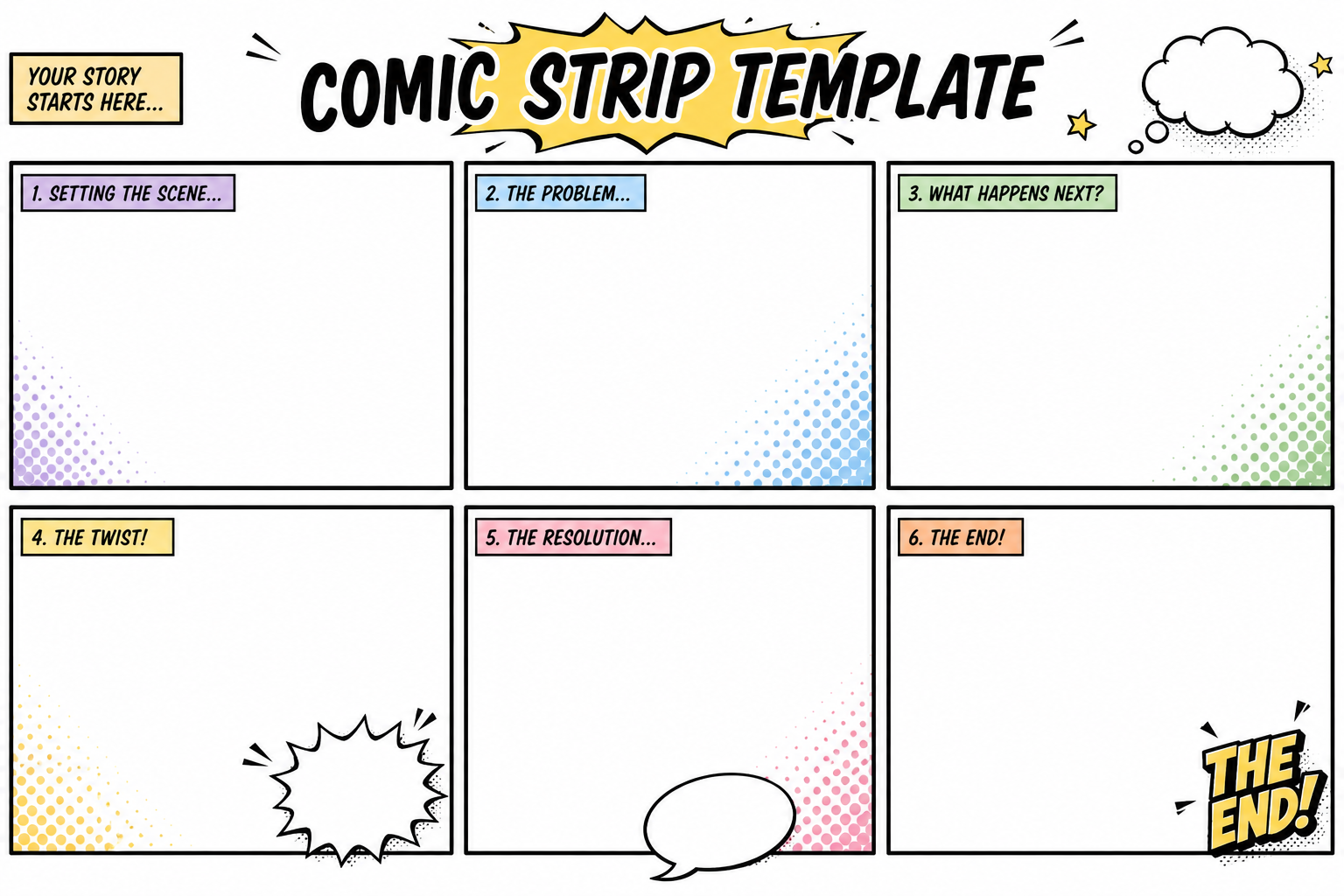
A comic strip template is a pre-designed layout that contains empty panels where illustrations, characters, text, and dialogue can be placed. These templates serve as the foundation of a comic, providing structure without restricting creativity. They come in various formats, including single-row strips, multi-panel pages, and complex storyboard layouts.
Most templates include designated spaces for artwork and speech bubbles. Some also feature sections for captions, sound effects, and narration. By using these predefined elements, creators can focus on storytelling rather than worrying about panel placement and page design. This makes the creative process smoother and more efficient.
Comic strip templates are available in both digital and printable formats. Digital templates are commonly used with graphic design software and drawing applications, while printable versions are popular in classrooms and workshops. Regardless of format, the primary goal remains the same: helping creators communicate stories clearly and effectively.
Benefits of Using a Comic Strip Template
One of the biggest advantages of a comic strip template is time savings. Designing panel structures from scratch can be repetitive and time-consuming. Templates eliminate this step, allowing creators to move directly into developing content. This increased efficiency is especially valuable for professionals working under deadlines.
Templates also improve organization. A structured layout helps creators plan scenes logically and maintain a consistent flow throughout the story. Readers can follow the narrative more easily when panels are arranged clearly and sequentially. Good organization ultimately enhances the overall reading experience.
Another important benefit is accessibility. Comic strip templates make visual storytelling available to people with different skill levels. Students, educators, business professionals, and hobbyists can all create engaging comics without advanced design knowledge. This accessibility has contributed to the widespread adoption of comic strips across various industries and educational settings.
Different Types of Comic Strip Templates
Comic strip templates come in many forms to suit different storytelling needs. The most common type is the three-panel template, which is frequently used for humor and short narratives. Its simple structure allows creators to establish a situation, develop it, and deliver a conclusion or punchline within a limited space.
Four-panel templates are another popular option. They provide additional room for character development and story progression. Many webcomics and educational comics rely on four-panel layouts because they balance simplicity with storytelling flexibility. These templates are ideal for creators who need slightly more space without overwhelming readers.
For longer stories, multi-page and storyboard templates offer greater creative freedom. These layouts include numerous panels arranged across multiple pages, making them suitable for detailed narratives, graphic novels, and project planning. The variety of available templates ensures that creators can find a format that aligns with their goals and audience expectations.
How to Choose the Right Comic Strip Template
Selecting the right comic strip template begins with understanding the purpose of your project. If you are creating a short joke or quick social media post, a simple three-panel template may be sufficient. For educational content or character-driven stories, a four-panel or six-panel layout might be more appropriate.
Audience considerations also play an important role. Younger readers often respond well to straightforward layouts with larger illustrations and minimal text. Professional audiences may prefer cleaner designs with structured storytelling and polished visuals. Choosing a template that matches your audience helps improve engagement and comprehension.
It is also important to consider your content volume. A template should provide enough space for dialogue and illustrations without feeling overcrowded. When panels become too crowded, readers may struggle to follow the story. Evaluating your narrative needs before selecting a template can prevent design challenges later in the creative process.
Tips for Creating Effective Comics Using Templates
A successful comic begins with a clear story. Before filling in a template, spend time outlining the narrative. Determine the beginning, middle, and end of the story, and identify key moments that should appear in each panel. A strong structure helps ensure that the final comic remains focused and engaging.
Visual consistency is equally important. Characters should maintain recognizable appearances throughout the comic, and panel transitions should feel natural. Consistent visual elements create a professional appearance and make it easier for readers to connect with the story. Templates support this consistency by providing a stable framework for content placement.
Dialogue should remain concise and purposeful. Overloading speech bubbles with text can reduce readability and weaken visual impact. Instead, focus on delivering essential information in a clear and conversational manner. Combining strong visuals with concise dialogue often produces the most effective comic strips.
Popular Uses of Comic Strip Templates
Comic strip templates are widely used in education. Teachers often encourage students to create comics as part of writing, language, history, and science assignments. This approach makes learning more interactive and helps students develop communication and critical thinking skills through visual storytelling.
Businesses and marketers also use comic strips to engage audiences. Comics can simplify complex information, promote products, and explain services in a visually appealing format. Because people naturally gravitate toward visual content, comic-based marketing campaigns often achieve higher engagement rates compared to text-only content.
On social media, comic strip templates have become a powerful content creation tool. Creators use them to share humor, personal experiences, educational tips, and relatable situations. Their easy-to-read format makes them highly shareable, helping creators reach larger audiences and build stronger online communities.
Conclusion
A comic strip template is far more than a simple page layout. It is a practical tool that helps creators transform ideas into organized and engaging visual stories. By providing structure, templates reduce design challenges and allow storytellers to focus on creativity, character development, and meaningful communication.
Whether you are a beginner exploring comics for the first time or an experienced creator looking to streamline your workflow, comic strip templates offer significant advantages. They save time, improve organization, and make visual storytelling more accessible to people from all backgrounds and skill levels.
As the demand for visual content continues to grow, comic strip templates will remain an essential resource for educators, marketers, artists, and content creators. By choosing the right template and applying effective storytelling techniques, anyone can create memorable comics that entertain, educate, and inspire readers.
You May Also Read: Spotify Wrapped Template


