


Introduction
If you spend any time on social media, watch reality TV, or chat with younger generations online, you have probably heard someone say, “Spill the tea.” At first glance, it may sound like they are talking about a hot cup of tea, but the phrase has a completely different meaning. In modern slang, “tea” refers to gossip, juicy information, secrets, or interesting news about someone or something.
The term has become incredibly popular over the years and is now used in everyday conversations across platforms like TikTok, Instagram, X, YouTube, and Facebook. Whether people are discussing celebrity drama, workplace rumors, or personal updates, the word “tea” has become a fun and engaging way to refer to information that people want to hear.
Understanding the meaning of Tea Slang Meaning is important because it helps you keep up with modern communication trends. In this article, we will explore what tea means, where it came from, how it is used, and why it has become such a significant part of online culture.
What Does Tea Mean in Slang?
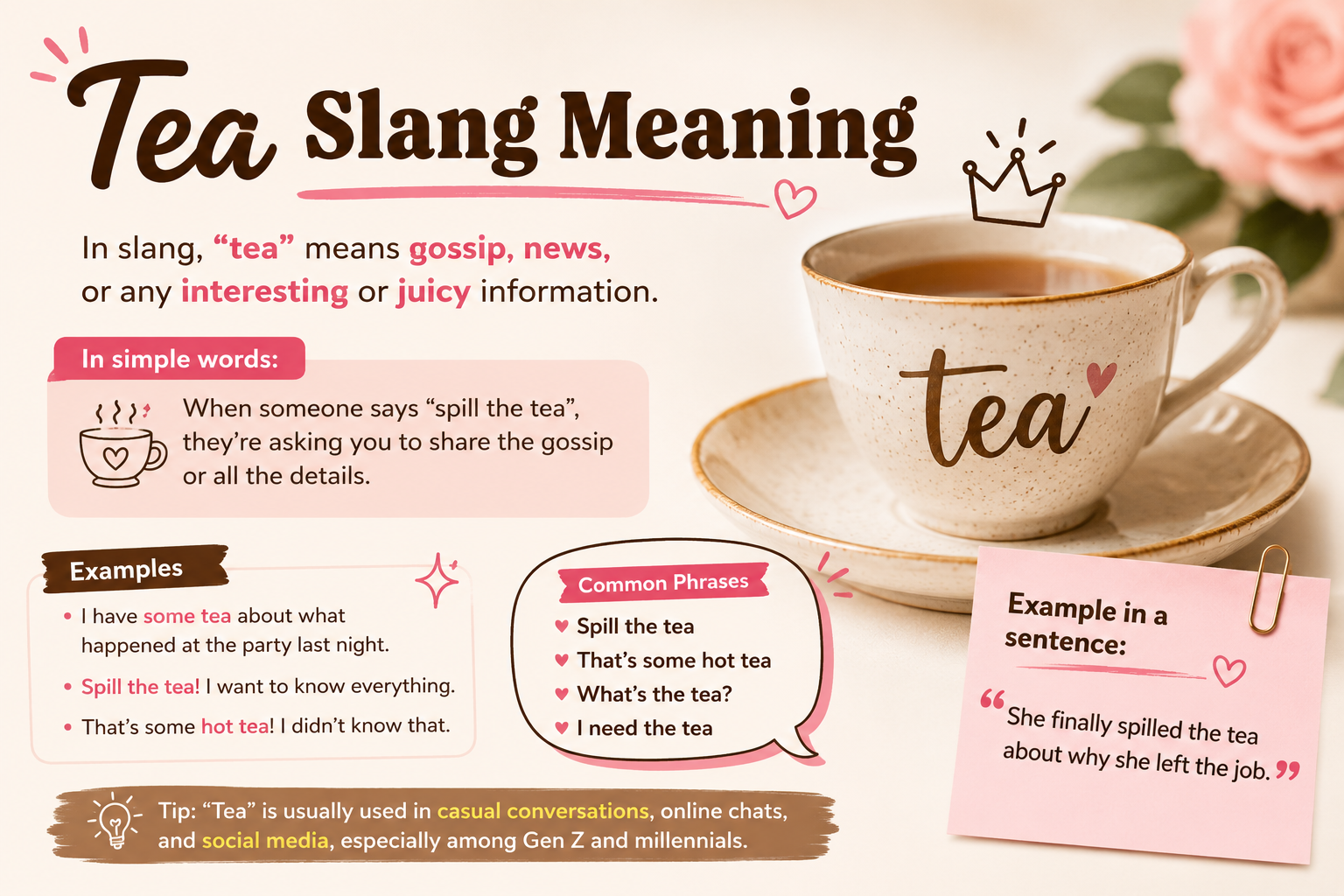
In slang terminology, “tea” simply means gossip, news, rumors, or information that is considered interesting or entertaining. When someone says they have tea, they are usually referring to details that others may not know yet. The information can be serious, funny, shocking, or completely harmless.
For example, if a friend tells you, “I have some tea about what happened at the party last night,” they are essentially saying they have interesting information to share. The phrase creates curiosity because it suggests there is a story behind the information.
The word can also be used to describe truthful information. In some contexts, people say, “That’s the tea,” which means, “That’s the truth” or “That’s what really happened.” Because of this flexibility, tea has become one of the most widely used slang terms in modern conversations.
The Origin of Tea Slang
Many people assume that Tea Slang Meaning is a recent internet invention, but its roots go much deeper. The term originated within Black drag and LGBTQ+ communities in the United States. Historically, the word “T” was used as shorthand for “truth.”
Over time, the pronunciation and spelling evolved into “tea.” Within these communities, sharing the tea often meant sharing personal truths, stories, or insider information. The phrase became a way to discuss events, experiences, and social interactions.
As social media platforms grew, the term spread far beyond its original communities. Popular television shows, online influencers, and celebrities helped introduce the expression to mainstream audiences. Today, millions of people around the world use the word tea without necessarily knowing its cultural origins.
What Does “Spill the Tea” Mean?
One of the most common expressions related to Tea Slang Meaning is “spill the tea.” This phrase means to share gossip, reveal information, or tell a story that others are eager to hear.
Imagine a situation where your friend returns from a vacation with an exciting story. Another friend might immediately say, “Come on, spill the tea!” In this case, they are asking for all the details.
The phrase is often used in a playful manner rather than a serious one. People enjoy hearing entertaining stories, and “spill the tea” has become a humorous way to encourage someone to share information. Because it sounds catchy and memorable, it quickly became one of the internet’s favorite expressions.
Popular Tea-Related Expressions
Tea Slang Meaning has inspired several related expressions that are frequently used in conversations. Each variation carries a slightly different meaning while staying connected to the core idea of information sharing.
One popular phrase is “Here’s the tea.” This expression is often used when someone is about to explain the truth behind a situation. It signals that important details are coming.
Another common phrase is “That’s the tea.” This means that the statement being made represents the reality of a situation. People often use it when clarifying misunderstandings or emphasizing a fact.
You may also hear “No tea, no shade.” This phrase means that a comment is not intended to insult or criticize anyone. It is often used before expressing an honest opinion. These variations demonstrate how Tea Slang Meaning has evolved into an entire vocabulary of its own.
How Tea Slang Is Used on Social Media
Social media has played a massive role in making Tea Slang Meaning popular worldwide. Platforms like TikTok, Instagram, YouTube, and X are filled with creators discussing the latest celebrity drama, trending topics, and viral controversies.
Content creators frequently use tea-related language because it immediately grabs attention. Titles such as “Celebrity Tea,” “The Latest Tea,” or “Spilling the Tea” encourage viewers to click and learn more about a story.
The phrase also works well in comments and captions. Users often write things like “I’m here for the tea” when they want updates about an ongoing situation. Others may ask people to “spill the tea” when they suspect there is more information behind a post or video.
Because social media thrives on engagement and storytelling, Tea Slang Meaning has become a natural fit for online communication.
Why Has Tea Slang Become So Popular?
The popularity of Tea Slang Meaning can be attributed to its simplicity and versatility. The word is short, memorable, and easy to understand once you learn its meaning. Unlike many slang terms that fade quickly, tea has remained relevant for years.
Another reason for its success is that people naturally enjoy stories and conversations. Gossip and interesting information have always been part of human interaction. Tea simply provides a modern and entertaining label for something people have always shared.
Additionally, the phrase works across many different situations. It can refer to celebrity news, workplace updates, school stories, relationship discussions, or internet drama. This broad applicability allows people from different backgrounds to use the term comfortably.
The influence of memes, influencers, and entertainment media has further strengthened its popularity, making tea a permanent fixture in online culture.
Examples of Tea Slang in Everyday Conversations
Understanding slang becomes easier when you see real-world examples. Tea can be used in casual conversations between friends, family members, and coworkers.
For instance, someone might say, “Did you hear the tea about the new manager?” This means they are referring to rumors or news about that person. Another example could be, “I have some tea to tell you after class.” In this case, they have interesting information to share later.
People also use tea when discussing celebrities. A fan might comment, “What’s the tea on this celebrity breakup?” Here, they are asking for details about the situation. These examples show how naturally the term fits into modern speech.
The key thing to remember is that tea almost always relates to information that people find intriguing or worth discussing.
Should You Use Tea Slang?
Whether you should use Tea Slang Meaning depends on your audience and situation. In casual conversations, social media posts, and friendly interactions, the term is widely accepted and understood by many people.
However, it may not be appropriate in professional or formal settings. During business meetings, academic writing, or official communications, using words like “information,” “news,” or “updates” is generally more suitable.
That said, understanding Tea Slang Meaning can still be valuable. Even if you choose not to use it regularly, knowing what it means helps you interpret conversations, online content, and cultural references more effectively.
Language constantly evolves, and tea is a great example of how modern slang can move from niche communities into mainstream communication.
Conclusion
Tea Slang Meaning has become one of the most recognizable expressions in modern culture. Simply put, “tea” refers to gossip, news, secrets, or interesting information, while “spill the tea” means to share those details with others. The term originated within Black drag and LGBTQ+ communities before gaining widespread popularity through social media and entertainment.
Today, tea is used in countless online and offline conversations. Its versatility, simplicity, and connection to storytelling have helped it remain relevant in an ever-changing digital landscape. Whether you hear someone say “spill the tea,” “here’s the tea,” or “that’s the tea,” you can now understand exactly what they mean.
As language continues to evolve, tea remains a perfect example of how slang can shape modern communication and become part of everyday vocabulary around the world.
You May Also Read: Cinnamon Tea Benefits


