


Introduction
When it comes to flooring that combines durability, style, and easy maintenance, epoxy floors stand out as one of the best choices available today. Whether you’re upgrading a residential garage, renovating a commercial space, or improving an industrial facility, epoxy flooring offers a practical solution that looks great while standing up to heavy use. Its seamless finish, resistance to stains, and impressive lifespan have made it increasingly popular among homeowners and business owners alike.
Unlike traditional flooring materials, epoxy creates a protective coating that bonds tightly with concrete surfaces. This creates a smooth, hard-wearing layer capable of handling everything from vehicle traffic to chemical spills. With advancements in flooring technology, epoxy is no longer limited to warehouses and factories. Today, it comes in a wide variety of colors, patterns, and decorative finishes that can complement almost any interior or exterior design.
If you’re considering a flooring upgrade, understanding how epoxy floors work, their advantages, installation process, maintenance requirements, and potential drawbacks can help you make a confident decision. This guide covers everything you need to know before investing in epoxy flooring.
What Are Epoxy Floors?
Epoxy floors are created by applying multiple layers of epoxy resin over a properly prepared concrete surface. Epoxy itself is made by combining resin and a hardener, which chemically react to form a rigid plastic material. Once cured, the result is an incredibly strong surface that adheres tightly to concrete and provides exceptional durability.
One of the biggest misconceptions is that epoxy is simply paint. In reality, epoxy flooring forms a much thicker and stronger coating than ordinary floor paint. While paint merely covers the surface, epoxy bonds with the concrete, creating a protective barrier that resists wear, moisture, and chemicals. This difference is one of the main reasons epoxy floors last significantly longer than painted surfaces.
Modern epoxy flooring systems are available in countless finishes. Homeowners can choose glossy solid colors for a clean appearance, decorative flake systems for added texture, metallic epoxy for a luxurious look, or quartz finishes designed for enhanced durability. This wide selection makes epoxy suitable for garages, kitchens, basements, retail stores, showrooms, workshops, hospitals, and manufacturing facilities.
Benefits of Choosing Epoxy Floors
One of the greatest advantages of epoxy floors is their exceptional durability. Once fully cured, the surface becomes resistant to scratches, impacts, abrasions, and heavy foot traffic. This makes epoxy an excellent investment for both residential and commercial environments where long-term performance matters.
Another significant benefit is its resistance to stains and chemicals. Oil, gasoline, grease, cleaning agents, and many household chemicals can be wiped away without penetrating the flooring. This feature makes epoxy particularly popular in garages, automotive shops, warehouses, and industrial facilities where spills are common.
Epoxy floors are also incredibly easy to maintain. Since the surface is seamless, dirt, dust, and debris have very few places to accumulate. Regular sweeping and occasional mopping are usually enough to keep the floor looking clean. For busy homeowners and business owners alike, this low-maintenance characteristic saves both time and money over the years.
Popular Types of Epoxy Floors
Solid color epoxy remains one of the most popular options because of its clean and professional appearance. It works well in garages, workshops, storage rooms, and commercial spaces where simplicity and functionality are the primary goals. Available in numerous colors, it can easily match different design styles.
Decorative flake epoxy has gained tremendous popularity among homeowners. Colored vinyl flakes are broadcast into the wet epoxy before a protective topcoat is applied. The finished surface not only looks attractive but also helps hide dirt, imperfections, and minor scratches while improving slip resistance.
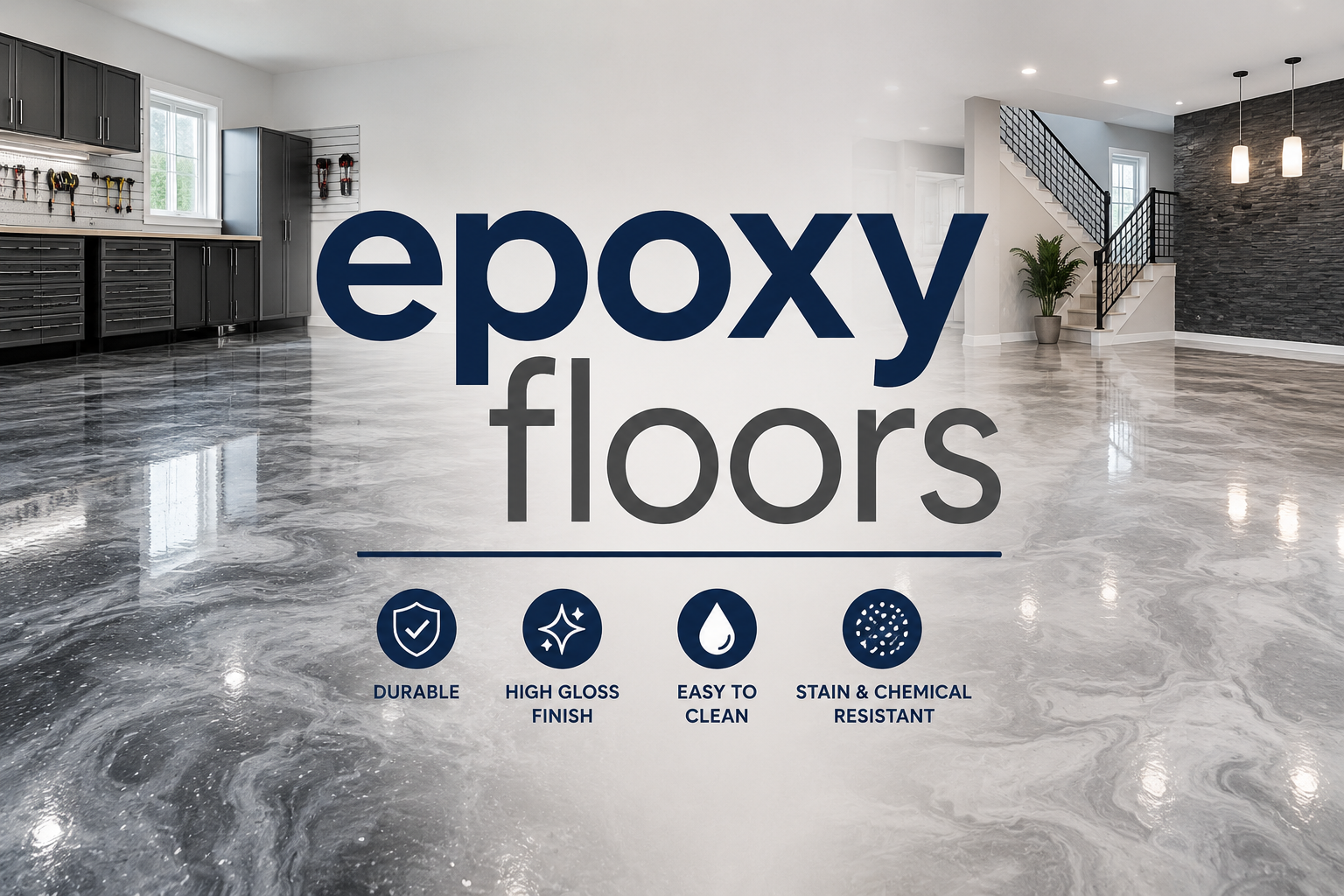
Metallic epoxy represents the premium end of the market. Metallic pigments create a three-dimensional effect that resembles flowing marble, molten metal, or natural stone. Each installation is unique, making metallic epoxy a favorite for luxury homes, restaurants, hotels, offices, and upscale retail spaces looking for a distinctive flooring solution.
Where Epoxy Floors Work Best
Residential garages remain one of the most common places for epoxy flooring. Vehicles, tools, lawn equipment, and heavy storage can quickly damage untreated concrete, but epoxy creates a durable protective barrier that makes the space easier to clean and much more visually appealing.
Commercial businesses also benefit greatly from epoxy floors. Retail stores, restaurants, offices, medical facilities, schools, and shopping centers appreciate the combination of durability, aesthetics, and easy maintenance. The glossy finish can even improve lighting by reflecting available light throughout the room, helping create a brighter environment.
Industrial facilities place extreme demands on flooring, making epoxy an ideal solution. Manufacturing plants, warehouses, distribution centers, laboratories, and automotive repair shops rely on epoxy because it withstands heavy machinery, forklifts, chemical exposure, and continuous traffic while maintaining its structural integrity.
Understanding the Installation Process
Proper surface preparation is the foundation of a successful epoxy floor installation. Professionals begin by inspecting the concrete for cracks, moisture issues, and contamination. The surface is typically ground or shot blasted to create the proper texture that allows the epoxy to bond effectively.
After preparation, any cracks or imperfections are repaired before the primer and epoxy layers are applied. Depending on the desired finish, decorative flakes, quartz aggregates, or metallic pigments may be added while the coating is still wet. Finally, a durable clear topcoat is applied to provide additional protection and enhance the appearance.
Curing time varies depending on the product and environmental conditions. While light foot traffic may be possible within a day or two, full curing often takes several days. Rushing the process can reduce the lifespan of the flooring, so allowing adequate curing time is essential for achieving the best results.
Maintenance Tips for Long-Lasting Epoxy Floors
Maintaining epoxy floors is surprisingly simple. Regular sweeping removes loose dirt and grit that could eventually cause minor surface scratches. Using a soft-bristle broom or microfiber dust mop helps preserve the floor’s glossy finish while keeping it looking fresh.
Routine mopping with warm water and a mild cleaner is generally sufficient for most residential and commercial spaces. Harsh chemicals or abrasive cleaning pads should be avoided unless specifically recommended by the flooring manufacturer. Gentle cleaning products help preserve the protective topcoat over time.
Heavy furniture, equipment, or machinery should be moved carefully to prevent unnecessary impacts. Although epoxy is highly durable, avoiding repeated abuse will extend its lifespan even further. Periodic inspections also allow minor issues to be addressed before they develop into larger problems requiring costly repairs.
Common Mistakes to Avoid
One of the most common mistakes is installing epoxy over poorly prepared concrete. Dirt, moisture, oil stains, or existing coatings can prevent proper adhesion, leading to peeling or bubbling later. Investing time in surface preparation dramatically improves long-term performance.
Another mistake involves choosing the cheapest materials available. High-quality epoxy products often contain higher solids content and provide greater durability than lower-cost alternatives. While premium products may cost more initially, they frequently offer better value over the life of the floor.
Some homeowners attempt installation without understanding the process. Although DIY kits exist, achieving professional-quality results requires specialized equipment, proper timing, and experience. Hiring qualified installers often leads to a smoother finish, stronger adhesion, and a significantly longer-lasting floor.
Is Epoxy Flooring Worth the Investment?
For many property owners, epoxy floors provide outstanding long-term value. Their durability means fewer repairs, reduced maintenance costs, and an attractive appearance that can last for many years when properly installed and maintained. This combination makes epoxy a smart investment rather than simply an aesthetic upgrade.
The versatility of epoxy flooring also adds to its appeal. Whether your goal is creating a sleek garage, modern basement, professional showroom, or heavy-duty industrial workspace, there is an epoxy system designed to meet your specific needs. With countless colors, textures, and finishes available, customization options are nearly endless.
Beyond appearance, epoxy enhances safety by improving visibility with its reflective finish and offering optional slip-resistant textures. Many formulations also resist bacteria, moisture, and mold growth, making them suitable for healthcare facilities, food preparation areas, and other environments where cleanliness is essential.
Conclusion
Epoxy floors have earned their reputation as one of the most reliable and attractive flooring solutions available today. They combine exceptional durability with modern aesthetics, making them suitable for homes, businesses, and industrial facilities alike. From resisting heavy traffic and chemical spills to offering effortless maintenance, epoxy flooring delivers benefits that few other flooring systems can match.
Choosing the right epoxy system begins with understanding your space, your budget, and your long-term goals. Professional installation, proper surface preparation, and regular maintenance all contribute to maximizing the lifespan of your investment. Although the upfront cost may be higher than some alternatives, the long-term performance often makes epoxy flooring the more economical choice.
If you’re looking for a flooring solution that balances strength, beauty, and practicality, epoxy floors deserve serious consideration. With the right installation and care, they can provide decades of dependable performance while transforming ordinary concrete into a durable, polished surface that enhances the value and appearance of your property.
You May Also Read: Connectivity Issues HassGamepad


