


Introduction
Rage comics are one of the most recognizable forms of internet humor ever created. Long before short-form videos and AI-generated memes dominated social media, rage .comics were entertaining millions of people with their simple stick-figure drawings and exaggerated facial expressions. They became a universal language for expressing everyday frustrations, awkward moments, hilarious failures, and relatable life experiences.
Although they first gained popularity more than a decade ago, rage .comics continue to hold a special place in internet culture. Many modern memes actually borrow ideas, storytelling techniques, and emotional expressions from the classic rage comic format. Their influence can still be seen across Reddit, Facebook, Instagram, Discord, and countless meme communities.
Whether you are discovering rage .comics for the first time or feeling nostalgic about the golden era of internet memes, this guide explores everything you need to know. From their origins and popular characters to their cultural impact and continued relevance today, let’s dive into the fascinating world of rage .comics.
What Are Rage Comics?
Rage .comics are short comic strips that use simple stick figures along with expressive black-and-white faces to tell funny, relatable stories. Instead of relying on detailed artwork, they focus on exaggerated emotions and everyday situations that many people experience.
Most rage .comics follow a straightforward storytelling format. A person encounters an ordinary situation, something unexpected happens, emotions escalate dramatically, and the story ends with a humorous facial expression that perfectly captures the reaction. This structure makes them easy to understand and instantly relatable.
The simplicity of rage comics is one of the reasons they became so successful. Anyone with basic drawing skills—or even no artistic talent at all—could create a comic using existing meme faces. This accessibility encouraged millions of internet users to contribute their own stories, helping the format spread rapidly across online communities.
The History of Rage Comics
The history of rage comics dates back to around 2008, when internet users began posting simple comics on online forums. The earliest rage comic featured the now-famous “Rage Guy” face, expressing frustration after a minor inconvenience. This comic quickly became popular because nearly everyone could relate to the feeling it represented.
As more users created their own comics, additional characters and facial expressions appeared. Communities such as Reddit, 4chan, and FunnyJunk became major hubs where creators shared original comics every day. Each new face represented a specific emotion or personality, allowing creators to tell more creative and expressive stories.
By 2011 and 2012, rage comics had become a worldwide internet phenomenon. Social media pages dedicated to memes gained millions of followers, and websites featuring daily rage comics attracted enormous audiences. During this period, rage comics became one of the defining symbols of internet culture.
Popular Rage Comic Characters
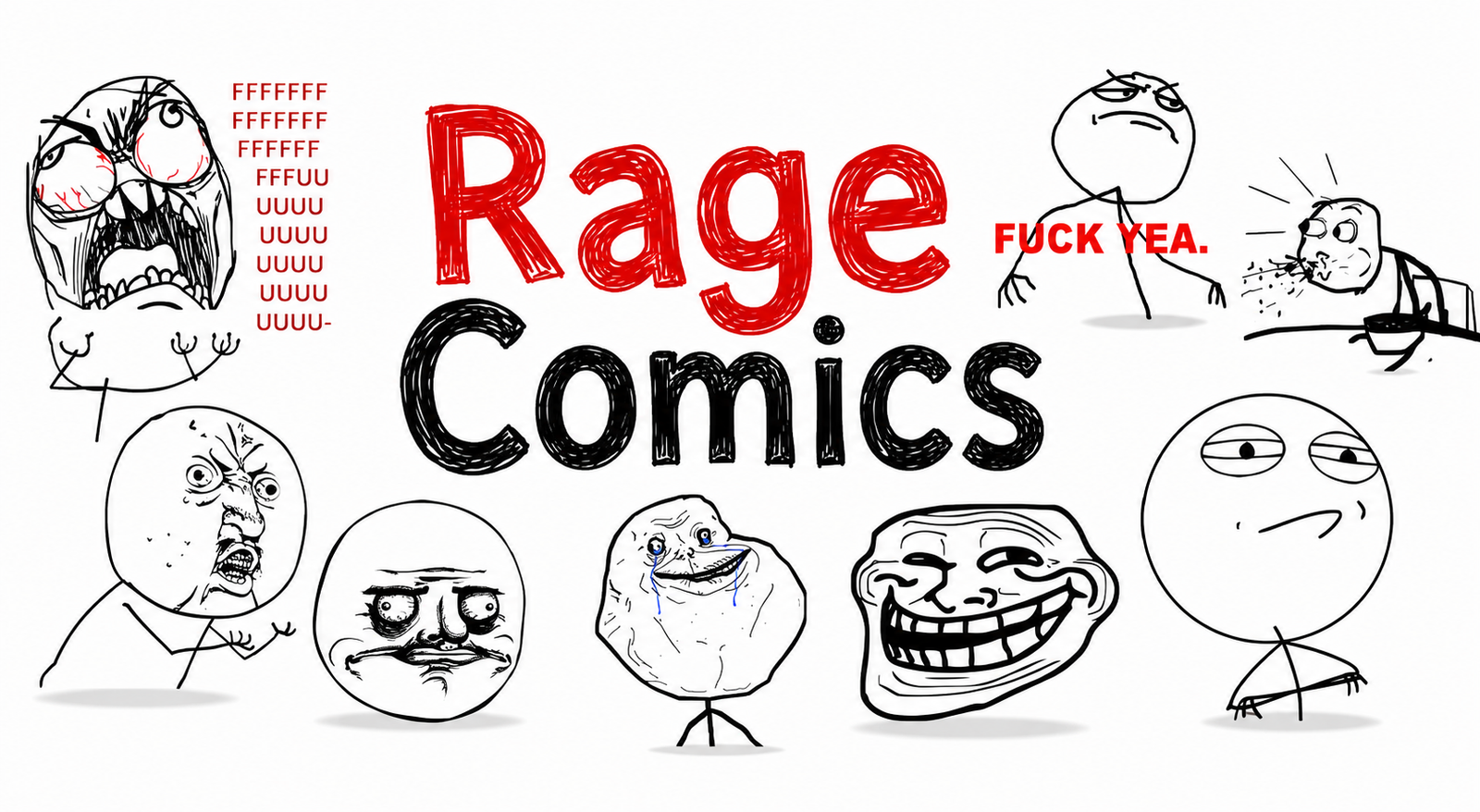
One of the biggest reasons for the success of rage comics is their memorable cast of characters. Each face represents a unique emotion that instantly communicates how someone feels without requiring lengthy explanations.
The “Forever Alone” character became famous for representing loneliness and social isolation. People used it to joke about spending holidays alone, struggling with dating, or feeling left out of social events. Despite its humorous appearance, many readers found the character surprisingly relatable.
“Trollface” symbolizes playful mischief and clever pranks. Whenever someone intentionally tricks another person or causes harmless chaos, Trollface usually appears at the end of the comic. It remains one of the most recognizable memes in internet history.
Other legendary characters include “Me Gusta,” “Okay Guy,” “Y U NO Guy,” “Poker Face,” “LOL Guy,” “F*** Yea Guy,” and “Cereal Guy.” Each one became associated with a particular emotional reaction, allowing creators to build funny stories using only a handful of expressions.
Why Rage Comics Became So Popular
The popularity of rage comics can largely be explained by their relatability. Instead of focusing on celebrities or current events, they highlighted everyday situations that almost everyone experiences. Missing the bus, forgetting homework, stepping on a LEGO brick, or getting embarrassed in public were all common themes.
Another major factor was their ease of creation. Unlike traditional comics that require artistic talent, rage comics only needed simple stick figures and a few familiar faces. Free online comic generators made the process even easier, encouraging thousands of people to create and share their own content.
Timing also played a significant role. During the early 2010s, social media platforms were growing rapidly, and users were eager for content that was easy to consume and share. Rage comics perfectly matched this demand, spreading across Facebook, Reddit, Tumblr, and countless meme websites.
The Evolution of Internet Memes
Internet humor has evolved dramatically over the years, but rage comics played an essential role in shaping today’s meme culture. They introduced many people to the idea that simple images combined with relatable captions could become viral entertainment.
As platforms like Twitter, TikTok, and Instagram gained popularity, meme formats shifted toward image macros, reaction GIFs, videos, and short clips. These newer formats often spread faster and adapted more easily to current events, gradually replacing traditional rage comics.
Despite this evolution, the storytelling style of rage comics continues to influence modern memes. Many reaction images and relatable posts still follow the same emotional structure established by early rage comics, proving that their legacy lives on even if the original format is less common.
How to Create Your Own Rage Comics
Creating a rage comic is surprisingly simple. The first step is thinking about a relatable experience that people can instantly recognize. Everyday frustrations, awkward conversations, workplace mishaps, and funny misunderstandings often make excellent comic ideas.
Next, divide your story into several panels. Introduce the situation, build anticipation, create an unexpected twist, and finish with the facial expression that best represents the character’s reaction. Keeping the story short usually makes the punchline stronger.
Finally, select the appropriate meme faces to match each emotional moment. Since readers already recognize these expressions, they immediately understand the joke without needing excessive dialogue. This efficient storytelling is one of the defining characteristics of successful rage comics.
Are Rage Comics Still Popular Today?
While rage comics no longer dominate the internet the way they once did, they certainly have not disappeared. Many online communities continue sharing classic comics for nostalgia, while some creators combine traditional rage faces with modern humor.
Younger audiences often discover rage comics through compilation videos, meme history channels, and archived collections. These introductions help preserve an important chapter of internet culture while introducing classic meme formats to a new generation.
Interestingly, many internet users who grew up reading rage comics still appreciate them today. Revisiting these comics often brings back memories of the early internet, making them both entertaining and nostalgic.
The Cultural Impact of Rage Comics
Rage comics had a lasting influence that extends far beyond simple internet jokes. They demonstrated how online communities could collaborate to create entirely new forms of entertainment without requiring professional artists or large media companies.
These comics also helped establish many of the internet’s shared visual languages. Expressions like Trollface, Forever Alone, and Me Gusta became instantly recognizable around the world, transcending language barriers through universal emotions.
Perhaps most importantly, rage comics encouraged creativity. Millions of users who had never created comics before suddenly found themselves writing stories, making jokes, and sharing original content online. This spirit of participation remains one of the defining features of internet culture today.
Tips for Making Better Rage Comics
A successful rage comic usually starts with an experience that many people have had. The more relatable your story is, the more likely readers are to connect with it and share it with others.
Avoid making your comics overly complicated. Simple setups with clear punchlines tend to be much funnier than stories with unnecessary details. The facial expressions should communicate most of the emotion, allowing the dialogue to remain brief.
Finally, originality matters. Although classic meme faces are familiar, presenting them in fresh situations keeps your comics entertaining. Combining timeless characters with modern experiences can produce surprisingly funny results.
Conclusion
Rage comics represent one of the most influential chapters in the history of internet humor. Their simple artwork, expressive characters, and relatable storytelling transformed online entertainment and inspired countless meme formats that followed. Even though newer styles of memes now dominate social media, the impact of rage comics remains undeniable.
For many internet users, rage comics are more than just nostalgic images. They symbolize an era when creativity flourished through community participation, and anyone could make millions of people laugh using nothing more than stick figures and expressive faces.
Whether you want to revisit classic memes, create your own comics, or simply understand the origins of modern internet humor, rage comics are well worth exploring. Their legacy continues to remind us that sometimes the simplest ideas can have the greatest impact on digital culture.
You May Also Read: Relatable Memes


